

What Is The Ultrasonic Homogenizer For Biodegradation
Nov 11, 2025
Ultrasonic biodegradation technology, with its advantages of being environmentally friendly, gentle operation, and capable of degrading difficult-to-treat substances, has broad application prospects in environmental protection, food, and biomedicine. However, it currently faces challenges such as energy consumption and scalability. As the technology continues to be optimized, its commercial and industrial application potential will gradually be released. To achieve large-scale application, this technology still needs to overcome several bottlenecks: First, energy consumption is high; current ultrasonic processing involves significant energy loss, especially in industrial applications where operating costs are high. Second, there is a lack of unified standards; parameters such as ultrasonic frequency and power are not standardized for different scenarios, leading to significant differences in processing effects. However, these problems can be gradually solved through technological optimization, such as developing high-efficiency transducers to improve energy conversion efficiency, establishing standardized parameter systems for different scenarios through big data, and developing modular equipment to adapt to large-scale processing needs. As the technology matures, its application costs will continue to decrease, and application scenarios will further expand, making its overall prospects very promising.
I. Working Principle of Ultrasonic Biodegradation
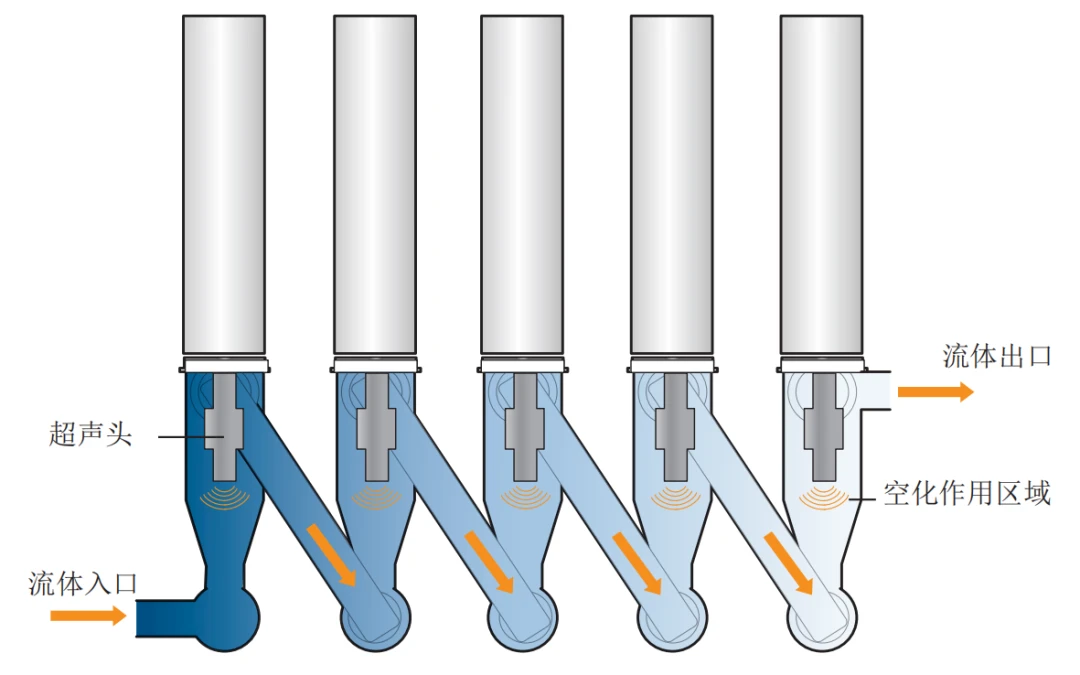
Ultrasonic homogenizer is the core: When ultrasound propagates in a liquid, it generates countless tiny bubbles (cavitation bubbles).
Intense bubble action: The cavitation bubbles expand rapidly and then collapse instantly, generating localized high temperature and pressure (up to thousands of degrees Celsius and hundreds of atmospheres) and strong shock waves.

Degradation of pollutants: Under high temperature and pressure, strong oxidizing substances such as hydroxyl radicals are generated. Simultaneously, the strong shock waves break the chemical bonds of pollutants, ultimately decomposing large molecular pollutants into small, harmless molecules (such as carbon dioxide and water).
II. Core Reasons for Using Ultrasonic Equipment
High degradation efficiency: The strong oxidation and mechanical impact of cavitation can rapidly decompose recalcitrant pollutants (such as pesticide residues and industrial organic wastewater).
No secondary pollution: No chemical agents are needed; degradation relies solely on physical and chemical processes, avoiding new pollution caused by pesticide residues.
Wide applicability: It can treat various organic and inorganic pollutants in liquids and is not limited by pollutant concentration, making it suitable for multiple scenarios such as wastewater treatment and food purification.
Simple Operation: The equipment operates stably, requires no complex maintenance, and can be used in conjunction with existing treatment processes, reducing retrofit costs.
What are some application cases of ultrasonic biodegradation technology?
Ultrasonic biodegradation technology, with its unique cavitation effect and oxidation characteristics, has practical applications in various fields such as industrial wastewater treatment, sludge disposal, biological experiments, food, and medical applications. The following are specific examples: Industrial Wastewater Treatment
Electronic Component Wastewater: An electronic component manufacturing company adopted a combined process of "high-efficiency filtration + neutralization and adjustment + advanced oxidation (ozone) + MBR + ultraviolet disinfection." After introducing ultrasonic-assisted treatment, the COD removal rate of the wastewater reached 93%, and the final effluent quality met the first-class discharge standard, significantly improving the purification effect of the original process.
Electroplating heavy metal wastewater: For electroplating wastewater containing 4000 × 10⁻⁶ mol/L of nickel, ultrasonic treatment achieved a nickel ion removal rate exceeding 99%. For industrial wastewater containing 1000 × 10⁻⁶ mol/L of copper, ultrasonic treatment achieved a copper ion removal rate of 99.8%. The core principle is to break down the heavy metal complex structure through vibration, facilitating subsequent precipitation and filtration.
Dyeing and tanning wastewater: A dyeing factory used 40kHz ultrasonic-assisted Fenton oxidation technology to effectively remove stubborn organic pollutants from the wastewater, achieving effluent standards that meet national discharge standards. Further experiments showed that pretreatment of tanning wastewater with ultrasound at a sound intensity of 1.47 W/cm² and a frequency of 24kHz, combined with coagulation and sedimentation, increased the COD removal rate by more than 10%, reaching a maximum of 73.2%, compared to simple coagulation and sedimentation.
Biological and Experimental Research Fields
Biomolecular Processing: In biochemical research, ultrasound can accelerate DNA fragmentation and degradation. This property meets the need for reducing DNA sample size in bioinformatics research and can also be used in environmental monitoring to analyze water DNA to locate pollution sources. Simultaneously, it can dissociate protein complexes, aiding in the screening of drug candidate molecules. In forensic medicine and clinical diagnosis, ultrasound can also assist in the extraction of nucleic acids from samples, improving detection efficiency and purity.
Food and Medical Related Fields
Degradation of Antibiotic Residues in Food: Antibiotics such as penicillin in milk are highly thermostable, and conventional heating sterilization is insufficient to completely remove them. A research team at Xihua University conducted an experiment on the degradation of penicillin in milk. Under conditions of 25℃ and pH 7, milk containing penicillin was treated with 150W ultrasound for 35 minutes. The final penicillin residue in the milk was less than 1 μg/L, meeting relevant safety standards. This method avoids the damage to milk quality caused by high-temperature or chemical treatments and provides a feasible solution for the treatment of antibiotic residues in dairy products.
Medical device sterilization aid: Ultrasound can destroy the cell membranes and cell walls of microorganisms, and can assist in the sterilization of medical devices in the medical field. For example, for some high-temperature-sensitive precision instruments, ultrasound can penetrate into crevices to kill bacteria, reducing the risk of cross-infection during medical procedures. It can also be combined with other sterilization methods to further enhance the effect.