

What Is The Advantages Of Ultrasonic Extraction Machine For Seaweed?
Oct 14, 2025
Algae are the world's oldest plants, lacking roots, flowers, or fruit. Seaweed draws nutrients from the ocean and reproduces asexually through spores. Over 17,000 species of seaweed have been documented, primarily categorized into four major groups: blue-green algae, green algae, red algae, and brown algae. The red and brown algae are primarily used in cosmetics and personal care products. Millions of tons of seaweed are grown annually in the ocean.
Seaweed extracts are natural active ingredients extracted from seaweed and have applications in medicine, cosmetics, food, agriculture, and other fields.
Seaweed extracts act as biostimulants and can be applied alone or in combination with chemical fertilizers. They not only improve fertilizer utilization efficiency and promote plant growth and development, but also enhance crop resistance to stress.

The primary theoretical basis for ultrasonic extraction is the cavitation, thermal, and mechanical effects of ultrasound. When high-energy ultrasound waves act on a medium, they create numerous small cavities, which close instantly and generate instantaneous pressures of up to several thousand atmospheres. The collapse of tiny bubbles during ultrasonic cavitation generates tremendous pressure, instantly rupturing plant cell walls and the entire organism, shortening disruption time. Furthermore, the vibrations generated by ultrasound enhance the release, diffusion, and dissolution of intracellular substances, significantly improving extraction efficiency.
Ultrasonic extraction technology is a core "high-efficiency active ingredient release tool" in seaweed extraction. Its function goes beyond simple "dissolution." Rather, it leverages physical, mechanical, and cavitation effects to address the low efficiency and active ingredient degradation of traditional extraction methods (such as hot water extraction and solvent reflux) through cell wall disruption, ingredient dissolution, and process optimization. Its specific effects can be broken down into four key areas:
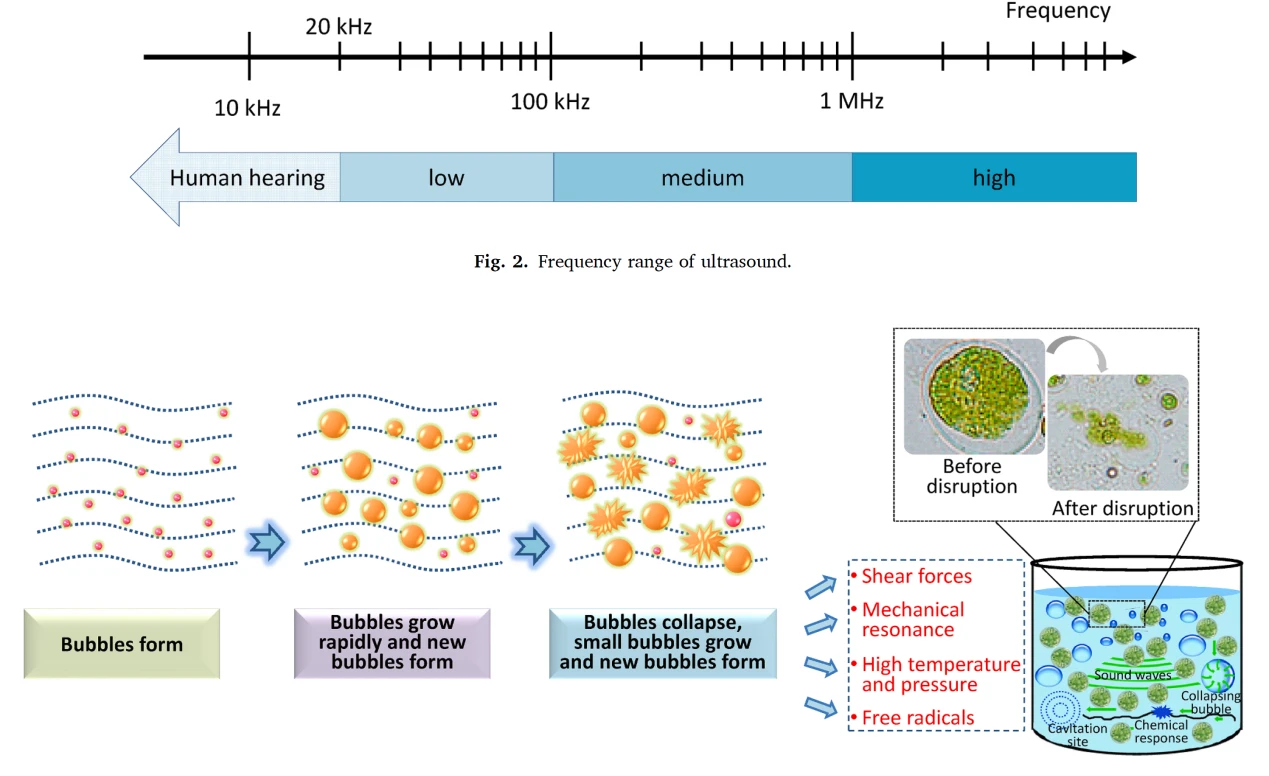
1. Powerfully disrupting seaweed cell walls and releasing intracellular active substances. The mechanical vibrations of ultrasound generate high-frequency mechanical vibrations, directly exerting "shear forces" on seaweed tissue, causing cracks and even rupture in the cell walls. Simultaneously, the cavitation effect generated by ultrasound in the liquid medium releases enormous localized energy, impacting the cell walls like a "micro-explosion," effectively breaking down structural barriers and allowing intracellular active ingredients to directly contact the extraction solvent, significantly improving dissolution efficiency.
2. it accelerates the dissolution of active ingredients, shortens extraction time, and reduces extraction temperature.
Ultrasound accelerates dissolution through two main mechanisms:
Enhanced mass transfer efficiency: High-frequency vibration creates intense turbulence and agitation in the extraction solvent (e.g., water, ethanol), breaking down the "concentration boundary layer" on the surface of the seaweed particles and allowing for more complete contact between the solvent and the active ingredients.
Advantages of low-temperature extraction: The energy from the cavitation effect and mechanical vibrations primarily acts on the cell wall, achieving efficient dissolution without relying on high temperatures. Extraction temperatures can typically be controlled between 30-50°C, reducing extraction time to half that of traditional processes.
3. Reduce Solvent Usage, Lowering Extraction Costs and Environmental Pressure
Due to its improved dissolution efficiency, ultrasonic extraction can achieve or even exceed the extraction rate of traditional processes while reducing solvent usage (the ratio can be reduced to 5:1-8:1).
4. Optimize Extract Quality and Enhance Subsequent Applications
Ultrasonic extraction can improve quality in two ways: 1. Reduce degradation of active ingredients; 2. Low-temperature extraction prevents high-temperature damage to natural auxins and polysaccharide chains.
In the seaweed extraction industry chain, ultrasonic extraction is a key technological bridge connecting "seaweed raw materials" with "highly active extracts." By combining the advantages of "high-efficiency physical cell wall destruction + low-temperature activity retention + cost-effectiveness," it overcomes the pain points of traditional processes, characterized by low efficiency, high consumption, and poor quality. It provides a high-quality raw material foundation for the subsequent preparation of highly active seaweed biostimulants, functional food additives, and other products. It is currently one of the most widely used core technologies in industrial seaweed extraction.