

Research And Application Of Ultrasonic Atomization Spraying Technology in Catalytic Film Preparation
Jun 22, 2026
Ultrasonic atomization spraying, relying on the high-frequency vibration precision atomization mechanism, can generate uniform, low-kinetic-energy microdroplets, enabling the controllable deposition of ultrathin, highly consistent catalyst layers with a material utilization rate exceeding 90%. This technology is gradually transitioning from laboratory research to industrial mass production in applications such as proton exchange membrane fuel cells, water electrolysis for hydrogen production, carbon capture catalyst membranes, photocatalytic separation membranes, and gas purification catalyst membranes. This article elucidates the basic principles, technological advantages, mainstream application scenarios, existing technological bottlenecks, and future development directions of ultrasonic atomization spraying for catalyst membrane preparation, providing a process reference for the large-scale preparation of high-performance catalyst membranes.
1.Basic Principles and System Composition of Ultrasonic Atomization Spraying for Catalytic Film Preparation
1.1 Atomization Film Formation Mechanism
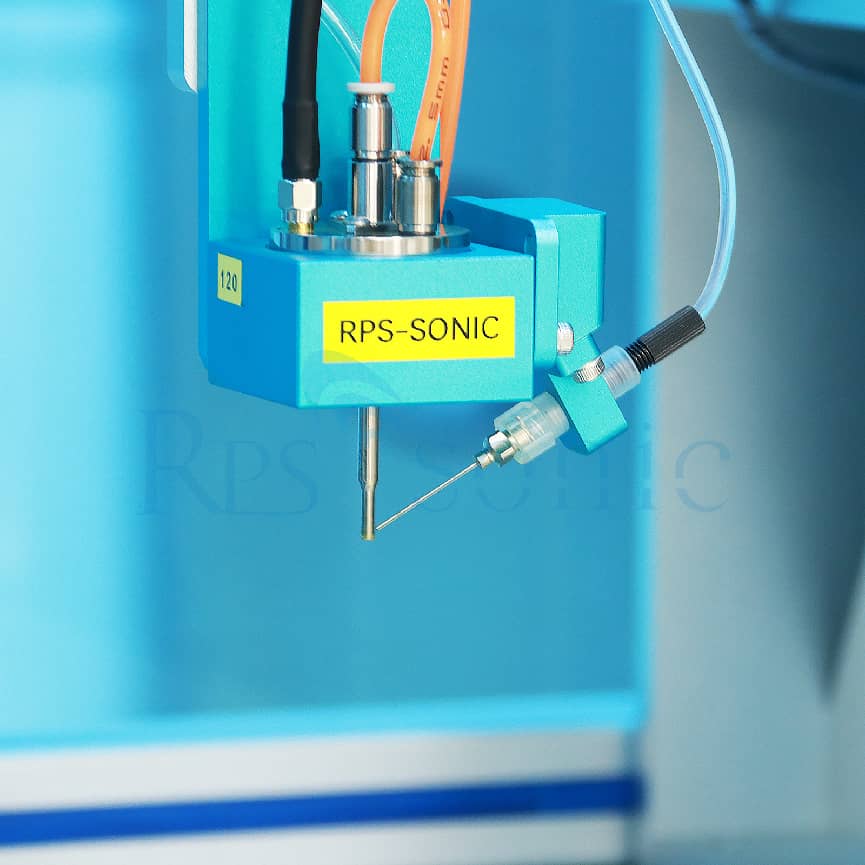
The ultrasonic nozzle incorporates a piezoelectric ceramic transducer, converting high-frequency electrical signals (20~120kHz) into high-frequency mechanical vibrations. These vibrations are transmitted to the liquid film at the nozzle end face, exciting periodic capillary waves. When the vibration energy exceeds the liquid surface tension threshold, the liquid film breaks down and disperses into narrowly distributed micro-droplets of 1~50μm. A small amount of low-pressure carrier gas directionally constrains the droplet trajectory, allowing the low-kinetic-energy droplets to settle smoothly onto substrates such as proton exchange membranes, porous ceramics, carbon paper, and polymer separation membranes. Layer-by-layer spreading and solvent evaporation solidify to form a continuous and uniform catalytic layer. The entire process is conducted without high-pressure impact, achieving "soft landing film formation" and avoiding substrate deformation, micropore blockage, and catalyst rebound waste.
The film-forming process allows for precise control of the catalyst layer thickness, loading, and porosity through six parameters: slurry flow rate, ultrasonic frequency, nozzle movement speed, substrate heating temperature, number of coating layers, and spray spacing. This enables the preparation of nanoscale ultrathin catalyst films and the construction of multi-layered gradient pore structure catalyst layers.
1.2 System Composition A complete ultrasonic spraying production line for catalyst films includes: ultrasonic atomizing nozzles, high-precision micro-liquid supply pumps, XYZ three-axis motion platform, constant temperature heating worktable, sealed dust removal chamber, gas source pressure regulating module, PLC closed-loop control system, and solvent recovery device. The laboratory model is a desktop small-scale device, while the mass production line can be configured with multi-nozzle arrays and roll-to-roll continuous coating structures, suitable for everything from small sample prototyping to large-area continuous roll production.
2. Advantages of Ultrasonic Atomization Spraying for Catalytic Membrane Preparation
2.1 Excellent Catalytic Layer Uniformity and Significantly Improved Active Site Utilization
Ultrasonic atomization produces droplets with narrow particle size distribution, effectively suppressing catalyst nanoparticle sedimentation and agglomeration, as well as the coffee ring effect. Catalytic layer thickness deviation can be controlled within ±5%, resulting in high consistency of catalyst loading per unit area. Full exposure of active components creates a continuous and unobstructed gas-liquid-solid three-phase reaction interface, significantly reducing the overpotential of the electrocatalytic reaction. Catalytic activity is increased by 10%~20% with the same amount of precious metals, making it particularly suitable for preparing catalytic membranes with ultra-low platinum and ultra-low iridium loadings.
2.2 Extremely High Utilization of Precious Metal Materials, Reducing Production Costs
Traditional pneumatic spraying suffers severe overspray loss, resulting in significant waste of precious metal slurries such as platinum, iridium, and ruthenium. Ultrasonic spraying exhibits strong directional deposition characteristics, achieving a material utilization rate exceeding 90%. Compared to traditional processes, it can save more than 30% of precious metal consumables, significantly alleviating the cost pressure caused by the scarcity of platinum group metals. This is a key path to cost reduction in the commercialization of low-loading membrane electrodes. 2.3 Mild Deposition Protects Fragile Substrates, Adaptable to Multiple Membrane Substrates
The low droplet velocity and low impact kinetic energy prevent the spraying process from causing swelling and perforation of proton exchange membranes, micropore collapse of porous ceramic membranes, or deformation damage to polymer separation membranes. It can be coated on both single and double sides of flexible films such as Nafion proton exchange membranes and anion exchange membranes, and can also be used to prepare catalytic layers on irregularly shaped and porous substrates such as carbon paper, nickel foam, honeycomb ceramics, PVDF ultrafiltration membranes, and titanium-based porous supports, demonstrating extremely strong substrate compatibility.
2.4 High Process Controllability, Adaptable to Gradient Structures and Customized Ultrathin Composite Catalytic Membranes
Through segmented variable parameter spraying, gradient catalytic membranes with different porosities in the surface and inner layers can be prepared, optimizing reactant mass transfer and gas desorption capabilities. The thickness of a single membrane layer can be precisely controlled from hundreds of nanometers to several micrometers. Multi-layer alternating spraying can construct dual-functional, composite catalytic coatings, meeting the structural design requirements of multiple scenarios such as electrolysis, photocatalysis, and membrane separation. The process has good repeatability and strong stability in mass production.
2.5 Green and low-pollution, environmentally friendly operation. No high-pressure, high-flow compressed air is required, resulting in lower organic solvent evaporation. The accompanying solvent recovery system enables closed-loop recycling of the slurry, and the emissions of waste gas and waste liquid are less than those of traditional spraying processes, which meets the green production standards for new chemical materials.
Ultrasonic atomization spraying, with its core advantages of uniform film formation, high material utilization, no substrate damage, and precise thickness control, overcomes the inherent defects of traditional catalytic membrane preparation processes. It perfectly meets the core requirements of high-performance catalytic membranes for microstructure, loading accuracy, and cost control, and has now become the mainstream preparation technology for hydrogen energy electrocatalytic membrane electrodes. It is also rapidly penetrating the catalytic membrane fields of carbon conversion, water treatment, waste gas treatment, and new energy storage. With the maturation of equipment industrialization and the standardization of process systems, ultrasonic atomization spraying will inevitably drive various catalytic membrane materials from laboratory research to low-cost, large-scale commercial mass production, providing key process support for the high-quality development of the new energy and environmental catalysis industry under the dual-carbon goals.