

How Can We Overcome The Bottlenecks in The Application Of Ultrasonic Homogenization Technology in The Biomedical Field?
Oct 10, 2026
How can we overcome the bottlenecks in the application of ultrasonic homogenization technology in the biomedical field?
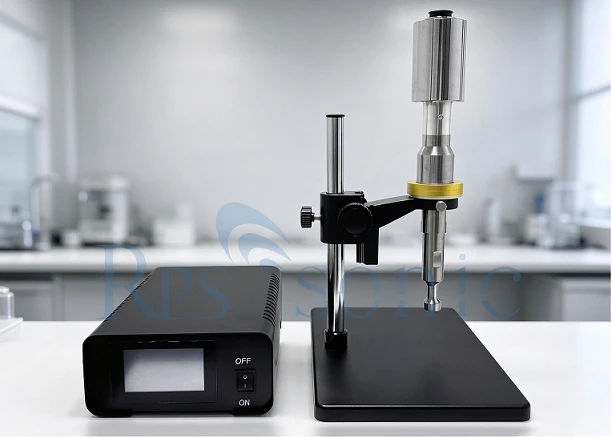
Principle: Relying on the ultrasonic cavitation effect, microbubbles in the liquid collapse violently to generate shock waves and microjets, achieving cell lysis, tissue homogenization, emulsification, nano-dispersion, and macromolecular shearing; combined with temperature control and pulse mode, it can reduce the thermal degradation of bioactive substances.
1. Molecular Biology & Biological Sample Pretreatment
1.1. Cell/Microbial Lysis: Disruption of bacteria, yeast, mammalian cells, and animal/plant tissues to release intracellular proteins, enzymes, and metabolites; recombinant protein preparation (extraction of inclusion bodies and target proteins from *E. coli* lysis).
1.2. Nucleic Acid Extraction and Fragmentation
- Lysis of samples before DNA and RNA extraction;
- ChIP (Chromatin Immunoprecipitation): Sonication to cut chromatin into DNA fragments of appropriate length;
- Next-Generation Sequencing (NGS) Library Preparation: Controllable fragmentation of genomic DNA.
1.3. Subcellular Organelle Separation: Gentle disruption of cell membranes while preserving the integrity of organelles such as mitochondria and endoplasmic reticulum for cell metabolism studies.
1.4. Exosomes/Extracellular Vesicles (EVs): Dispersing frozen aggregated vesicles to improve dispersibility and enhance drug delivery experiments (ultrasonic energy must be controlled to prevent vesicle rupture).
2. Biopharmaceutical and Nanomedicine Formulations
2.1. Preparation of Liposomes, Nanoemulsions, and Nanoparticles: Cavitation emulsification to prepare liposomes and drug-loaded nanoemulsions with uniform particle size for targeted drug delivery (anti-tumor, injectable formulations), improving the solubility and bioavailability of poorly soluble drugs.
2.2. Vaccine Development: Microbial cell disruption to extract antigens; preparation of adjuvant emulsions to emulsify antigens and oil-phase adjuvants, stabilizing vaccine suspensions.
2.3. Low-Temperature Extraction of Active Substances from Natural Drugs: Ultrasonic-assisted extraction of polysaccharides, flavonoids, alkaloids, etc., using low temperatures and short extraction times to reduce the inactivation of active ingredients.
2.4. Biopharmaceutical Processes: Dispersing bio-nanocarriers and biopolymers to improve the homogeneity of suspensions.
3. In Vitro Diagnostics (IVD)
- Homogenization and cell lysis of blood, saliva, and tissue samples for sample pretreatment in nucleic acid and protein immunoassay detection;
- Integration into automated diagnostic equipment for non-contact ultrasonic mixing and lysis of samples; ultrasonic spraying of biosensor layers for microfluidic chip biocoatings.
4. Pathology and Tissue Engineering
- Tissue homogenization: Rapid homogenization of small tumor fragments and animal organ tissues for biochemical detection and quantification of pathological biomarkers;
- Bioscaffold preparation: Ultrasonic dispersion of biopolymers and bioactive powders to prepare precursor solutions for tissue engineering scaffolds.
5. Microbiology and Virology Research
- Disruption of bacterial cells and viral particles for extraction of viral nucleic acids and bacteriophages;
- Sample pretreatment for screening microbial metabolites and antibiotics.