


Sonicator Homogenizer
A critical component of any sample preparation is making the sample homogeneous. However, when working with a large number of samples, this is often a time-consuming and labor-intensive task. The act becomes even more tedious and cumbersome when one needs to break down a large, tough solid to a submicron level, since this requires multiple pieces of ultrasonic homogenizing equipment.
Product Details
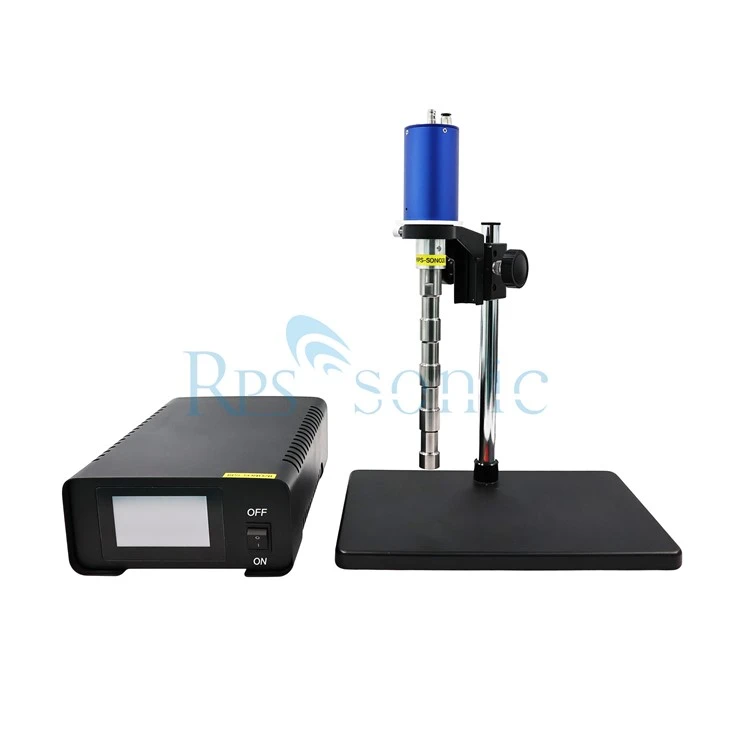
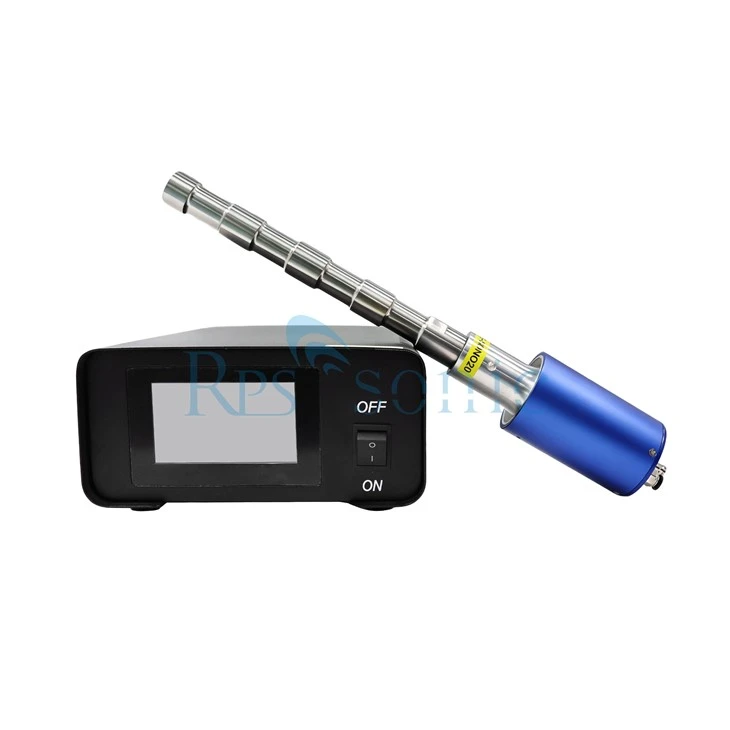
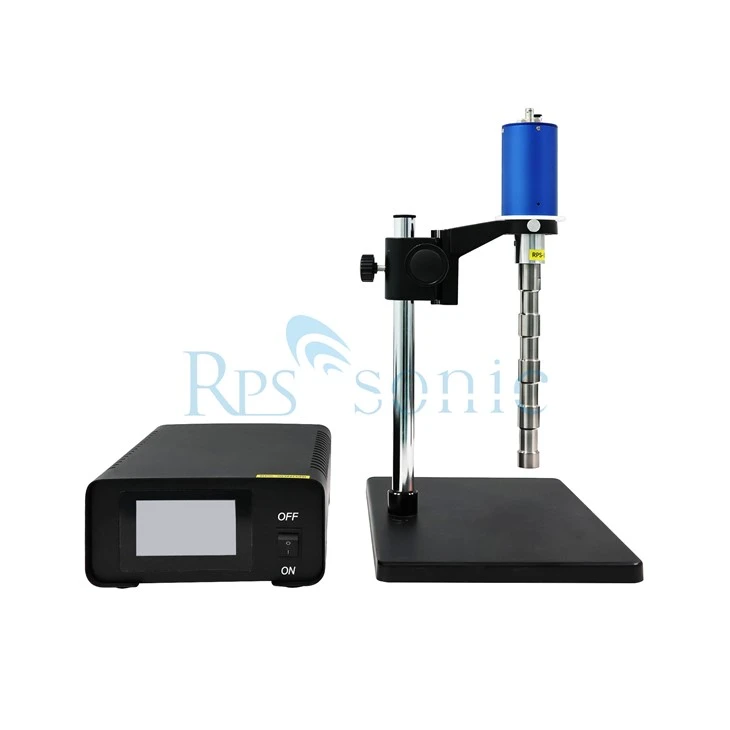
Sonicator homogenizer
The Sonicator homogenizer emits ultrasonic sound waves or "sonicates" to extract, infuse, homogenize, emulsify, suspend, de-gas or even rapidly create barrel-aged flavor. By applying low heat vibrations of sound energy, this Sonicator homogenizer provides you an incredible range of techniques.A sonicator homogenizer (ultrasonic homogenizer) uses high-power ultrasonic vibration. The transducer converts electrical energy into mechanical vibration, transmitted through the sonotrode into liquid. Ultrasonic cavitation occurs: micro bubbles form and collapse rapidly, producing strong shear, turbulence and impact force to break down materials at microscopic level.
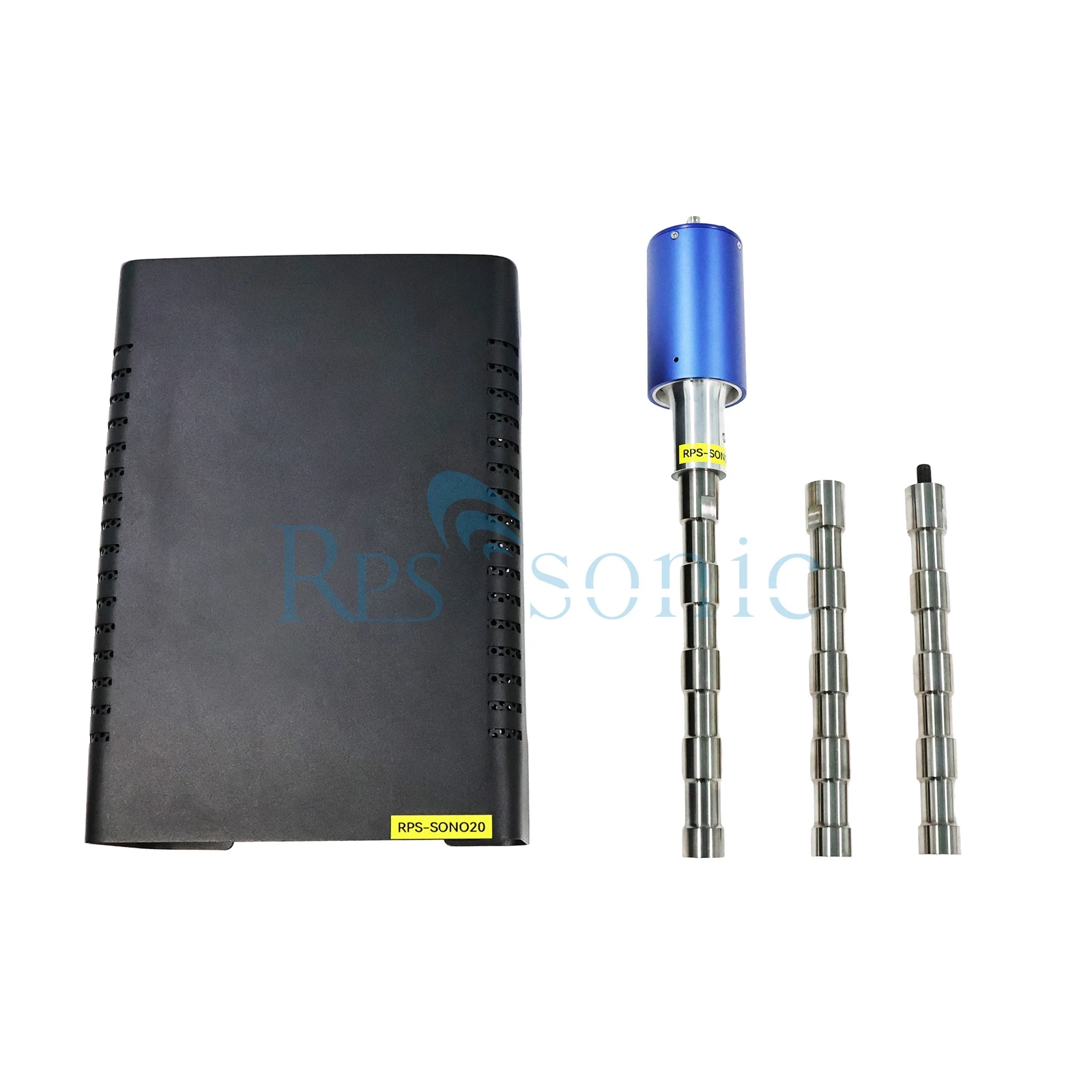
The system is comprised of just four components: a generator, converter, probe and sound box. In any low-to medium-viscosity liquid, the probe tip releases rapid, high-frequency ultrasonic vibration waves that expand and collapse microscopic bubbles at 28000 cycle per second. The process takes just 2-3 minutes and generates only insignificant amounts of heat, preserving vivid colors, aromas and nutrients, while producing rounder and smoother overall flavors. The short processing times provide maximum operational flexibility for chefs.
Open up even more culinary horizons:
Make vinaigrettes without using an emulsifier
Give wine a fuller and rounder mouth feel
Infuse cocktails and other liquids with volatile aromas of fresh herbs or spices
Intensify fruit or vegetable pulp for sauces and puree
Tenderize and marinate meat in seconds
Parameter:
| Model/Data | Sono-L20-1000 | Sono-L20-2000 | Sono-L28-800 | Sono-L40-500 |
| Frequency | 20khz | 20khz | 28khz | 40khz |
| Power | 1000w | 2000w | 800w | 500w |
| Max Capacity | 5L | 10L | 2L | 1L |
| Temperature | 300℃ | |||
| Horn Material | Titanium alloy | |||
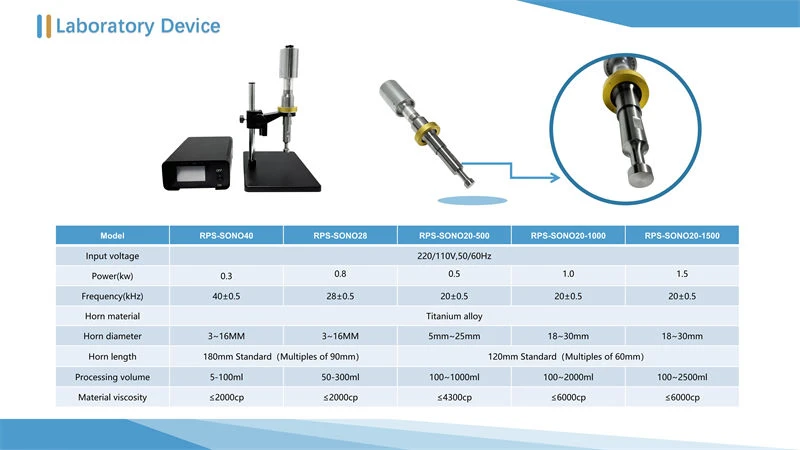
Sonicator Homogenizer – Selection Guide (Based on Throughput & Material Viscosity)
1. Throughput
2. Material Viscosity
Hot Tags: sonicator homogenizer, China, suppliers, manufacturers, factory, custom, microtip probe sonicator, microtip sonicator, Industrial Ultrasonic Homogenizer, High Pressure Homogenizer, sonic homogenizer, Probe Sonicator
Send Inquiry
