Why Are Ultrasonic Emulsification Devices Used in The Cosmetics Industry?
Nov 06, 2025
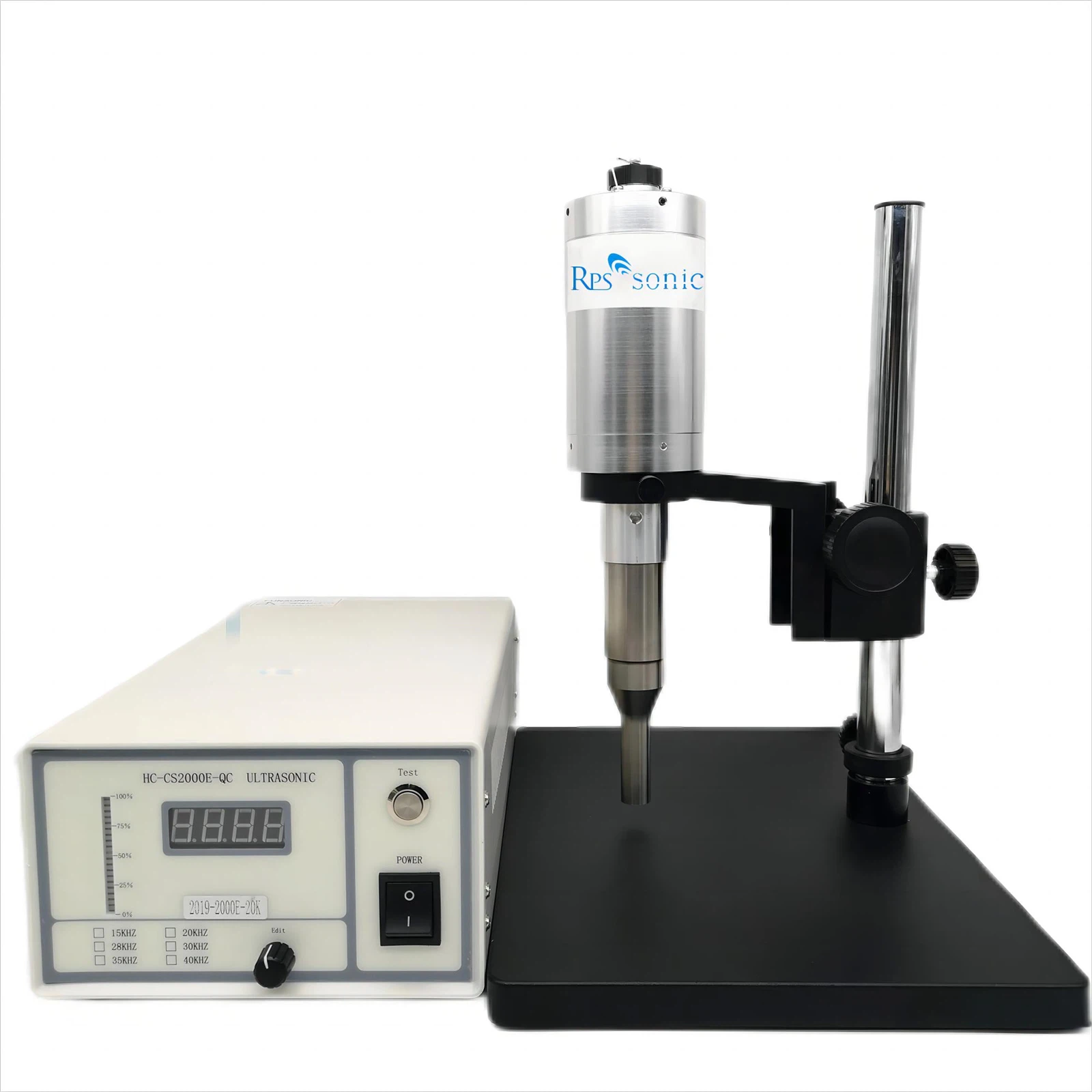
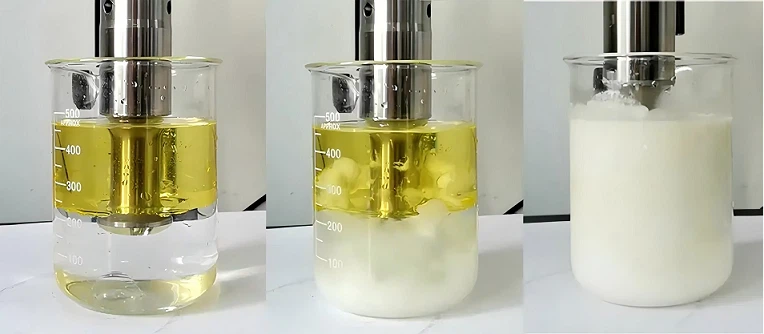
Ultrasonic emulsification is a technique that uses a high-frequency controlled oscillating plate to generate high-frequency oscillation waves, efficiently mechanically emulsifying the dispersed phase in a liquid. Ultrasonic oscillation disturbs the internal structure of liquid molecules, breaking them down into tiny particles and forming a homogeneous emulsion.
In cosmetics, emulsification is a crucial manufacturing process that ensures the thorough and uniform mixing of oily and watery components in serums, making the cosmetics easier for the skin to absorb. However, traditional emulsification processes require emulsifiers, which can have adverse effects on the skin. Ultrasonic emulsification technology addresses this issue by producing finer molecules in cosmetics that are more easily absorbed by the skin without affecting their composition or properties.
Advantages of Ultrasonic Emulsification in Cosmetics:
1. Finer Molecule Breakdown for Easier Skin Absorption:
Ultrasonic oscillation breaks down molecules and particles in cosmetics into smaller particles, making them easier for the skin to absorb.
2. No Impact on Cosmetic Ingredients and Properties:
Ultrasonic emulsification technology eliminates the need for emulsifiers, thus preserving the ingredients and properties of cosmetics.
3. Improved Cosmetic Stability:
Ultrasonic oscillation efficiently emulsifies the dispersed phase in a liquid, forming a uniform emulsion. This improves the stability of cosmetics and prevents separation or spoilage.
4. Reduced Manufacturing Costs:
Ultrasonic emulsification completes the emulsification process in a shorter time, reducing manufacturing costs.
Ultrasonic emulsification technology uses high-frequency oscillation waves (typically 20-100kHz) to generate mechanical disturbances within liquid molecules, breaking the dispersed phase into micron-sized particles (particle size controllable between 0.1-10μm), forming a uniform and stable emulsion system. This technology eliminates the need for traditional emulsifiers, avoiding the impact of chemical additives on the skin. It is particularly suitable for the production of high-end cosmetics such as serums, significantly improving the penetration and absorption rate of active ingredients (by 30-50%). Its core advantages include: 1) Nanoscale emulsification effect (particle size distribution CV value <15%), enhancing skin absorption efficiency; 2) Maintaining the natural properties of ingredients, suitable for formulas for sensitive skin; 3) Improved emulsion stability (extended shelf life by 20-30%), preventing separation and spoilage; 4) Energy consumption reduction of 40-60%, aligning with green production trends.