

Ultrasonic Atomization Spraying: The Precision Path To Reshaping Automotive Glass Anti-fog Coatings
Jan 16, 2026
Automotive glass, as the core carrier of driving visibility, directly determines driving safety. In autumn and winter or in high-humidity environments, fogging of car windows has become a major pain point for countless car owners, and the application of anti-fog coatings is a key means to solve this problem. With the upgrading of coating technology, ultrasonic atomization spraying equipment, with its unique technological advantages, has gradually replaced traditional processes and become the preferred solution for preparing automotive glass anti-fog coatings. This article will delve into the core value of automotive glass anti-fog coatings, the limitations of traditional processes, and the working principle, functional advantages, and application logic of ultrasonic atomization spraying equipment.
I. Automotive Glass Anti-fog Coatings: The "Invisible Barrier" for Driving Safety
The essence of car window fogging is the physical condensation effect caused by "temperature difference + humidity." When hot, humid air comes into contact with cold glass, the temperature drops sharply, the water vapor saturation exceeds the standard, and it condenses into tiny water droplets that adhere to the inner surface of the glass, forming fog that obstructs vision. Data shows that when the humidity inside a car exceeds 80% and the outside temperature is below 5°C, the probability of car windows fogging up is as high as 99.99%. This blurred vision not only affects the driving experience but also significantly increases the risk of rear-end collisions, scrapes, and other traffic accidents.
Anti-fog coatings solve the fogging problem at its root by altering the surface properties of the glass. The core principle is to form a transparent and uniform molecular film on the glass surface, either spreading condensed water droplets into an imperceptible water film (hydrophilic coating) or causing water droplets to aggregate into larger particles and slide off quickly (hydrophobic coating), thereby maintaining the clarity of the glass surface. Compared to temporary methods such as air conditioning dehumidification and wiping with a towel, anti-fog coatings have advantages in long-lasting effectiveness and stability. A single application can maintain the anti-fog effect for several days or even months, eliminating the need for frequent operations and providing continuous protection for driving safety. At the same time, high-quality anti-fog coatings also have anti-glare and anti-oil properties, further optimizing the driver's field of vision.

II. Traditional Anti-fog Coating Processes: A Limited and Inefficient Solution
Before the application of ultrasonic technology, automotive glass anti-fog coatings primarily relied on traditional processes such as manual coating and pneumatic two-fluid spraying. These methods have significant shortcomings in terms of precision, efficiency, and effectiveness, making it difficult to meet the stringent quality requirements of the automotive industry.
Pneumatic two-fluid spraying was a widely used process in industrial settings. Its principle is to use a high-pressure airflow to atomize liquid anti-fog agent into droplets, which are then sprayed onto the glass surface. Compared to manual coating, this process is more efficient, but it still has core drawbacks: high-pressure airflow easily leads to droplet splashing, causing material waste and polluting the production environment; uneven droplet size distribution, with large droplets easily forming pinholes and runs, affecting coating smoothness and optical performance; low precision in coating thickness control makes it difficult to produce ultra-thin and uniform functional coatings, limiting adaptability. Furthermore, high-pressure nozzles are prone to wear and clogging, requiring frequent maintenance, increasing production costs and downtime.
III. Ultrasonic Atomization Spraying Equipment: Why is it the Preferred Tool for Anti-fog Coatings? Automotive glass anti-fog coatings have extremely high requirements for transparency, uniformity, adhesion, and long-lasting effectiveness, which traditional processes struggle to meet due to limitations. Ultrasonic atomization spraying equipment, with its core advantages of "precision atomization, accurate control, high efficiency, and environmental friendliness," perfectly meets the preparation needs of anti-fog coatings, becoming a core direction for technological upgrades.
From a coating quality perspective, anti-fog coatings need to form a transparent film with uniform thickness (typically nanometer to micrometer level), free of pinholes and defects, to ensure that the optical performance of the glass is not affected while achieving long-lasting anti-fog performance. Ultrasonic atomization spraying can precisely control droplet size and coating thickness, ensuring that the coating uniformity deviation is controlled within ±5%, far superior to the ±15% of traditional processes. In terms of production efficiency, the equipment supports XYZ three-axis automated programming and can be adapted to automotive glass of different sizes and shapes (windshields, side windows, rear windows, etc.), enabling continuous and large-scale spraying and significantly improving production efficiency. From an environmental and cost perspective, ultrasonic atomization spraying eliminates the need for high-pressure airflow, achieving a material utilization rate of over 90%, four times that of traditional pneumatic spraying. This reduces anti-fogging agent waste and lowers waste disposal costs, aligning with green production principles. Furthermore, the equipment's nozzles experience no wear or clogging, resulting in low maintenance costs, high stability, and ensuring continuous production.
IV. Ultrasonic Atomization Spraying: A Precise Path from Atomization to Spraying
The core advantage of ultrasonic atomization spraying equipment stems from its unique working principle. The entire process is divided into two stages: "precision atomization" and "precision spraying." Through a combination of physical mechanisms and automated control, high-quality coating preparation is achieved.
(I) Precision Atomization: Pressureless Generation of Micron-Sized Droplets
The core of ultrasonic atomization is the conversion of electrical energy into high-frequency mechanical energy using the "piezoelectric effect," achieving pressureless atomization of the liquid. This eliminates the need for high-pressure airflow, fundamentally solving problems such as uneven droplet distribution and splashing inherent in traditional spraying. The specific process is as follows: The core components of the equipment include an ultrasonic generator, transducer, titanium alloy nozzle, and liquid supply system. An ultrasonic generator converts mains frequency electrical energy into high-frequency electrical energy at a specific frequency (typically 20kHz-200kHz), which is then transmitted to a piezoelectric ceramic transducer. The transducer converts this high-frequency electrical energy into mechanical vibrations of the same frequency. These vibrations are transmitted to the liquid anti-fogging agent through a titanium alloy nozzle. When the liquid comes into contact with the atomizing surface of the nozzle, the high-frequency vibrations create standing waves on the liquid surface, tearing the liquid into uniform micron-sized droplets (median droplet size controllable between 15-40μm, and 1-5μm in some applications).
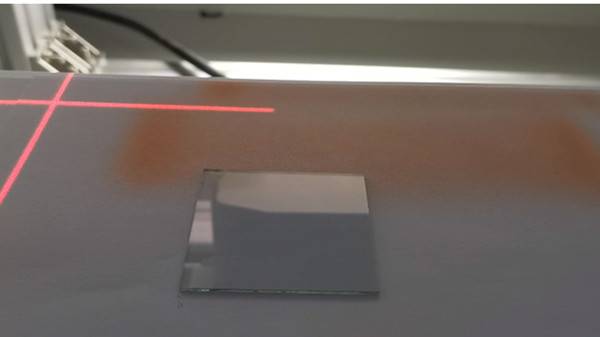
The size and distribution of the droplets can be precisely controlled by adjusting equipment parameters: the higher the vibration frequency, the smaller the droplet size; liquid viscosity and surface tension are adapted through a matching liquid supply system (supporting liquids with a viscosity ≤30cps). Compared to traditional high-pressure atomization, ultrasonic atomization generates droplets with a normal distribution, exhibiting excellent uniformity and low droplet velocity, reducing splashing and laying the foundation for high-quality coatings. Furthermore, the atomization process does not require high pressure, eliminating the risk of wear and clogging inside the nozzle, significantly improving equipment stability. (II) Precision Spraying: Uniform Deposition under Automated Control The atomized droplets need to be precisely controlled and uniformly deposited on the automotive glass surface to form a compliant anti-fog coating. This stage relies on the equipment's automated control system and auxiliary functions. The specific process includes: First, a precision injection pump system stably delivers liquid anti-fog agent to the nozzle, ensuring uniform and controllable supply volume with a flow rate adjustment ratio of up to 10:1 to adapt to different coating thickness requirements. Second, guided by a low-pressure carrier gas (pressure ≤0.05MPa), the atomized droplets are directionally sprayed onto the glass surface. The carrier gas pressure is extremely low, serving only a guiding role and not disrupting droplet uniformity. Third, the automotive glass is fixed to the worktable by a vacuum adsorption device, and the XYZ three-axis motion system moves the nozzle according to a preset program. The spraying path can be precisely programmed according to the glass size and shape, achieving seamless, full-coverage spraying. Finally, the equipment is equipped with a heating and drying system (maximum temperature 150℃), which rapidly cures the coating after spraying, improving adhesion and stability while shortening the production cycle.
The entire spraying process allows for precise control of multiple parameters: coating thickness can be freely set from 20nm to 100μm to meet the needs of different anti-fogging agent formulations and application scenarios; the spraying width can be adjusted within the range of 0.5-260mm to adapt to different sizes of automotive glass; and parameters such as spraying speed, liquid supply, and atomization frequency can be monitored in real time through a PLC control system and touch screen operation, ensuring consistency and traceability of the production process.
Conclusion: Automotive glass anti-fogging coatings are a key component for ensuring driving safety, and upgrades in their preparation process directly affect anti-fogging effectiveness and production efficiency. Ultrasonic atomization spraying equipment, with its precise atomization mechanism, accurate automated control, and high-efficiency environmental performance, breaks through the limitations of traditional processes, providing a standardized, high-quality preparation solution for automotive glass anti-fogging coatings. As the automotive industry continues to raise its requirements for safety performance and production processes, ultrasonic atomization spraying technology will be more widely used in the field of automotive glass surface treatment, driving the manufacturing of automotive safety components towards a more precise, efficient, and environmentally friendly direction.