

Ultrasoni Spray Coating: Breaking The Bottleneck in Solid-state Battery Electrolyte Layer Preparation
Jan 16, 2026
Ultrasonic Atomization Spraying: Overcoming Bottlenecks in Solid-State Battery Electrolyte Layer Preparation and Empowering Industrialization
One of the core bottlenecks in the industrialization of solid-state batteries lies in the efficient and precise preparation of the electrolyte layer. Ultrasonic atomization spraying technology, with its unique technical characteristics, has become a key support for solving this problem, laying a solid foundation for the core process of solid-state battery industrialization. As a key technology adapted to solid-state battery electrolyte layer preparation, ultrasonic atomization spraying achieves a uniform thin coating of the electrolyte layer through the synergistic effect of high-frequency vibration atomization and precise deposition. This fundamentally solves the core pain points of traditional processes. Its technical advantages are highly compatible with the preparation requirements of solid-state batteries, making it an important technical path to promote the large-scale mass production of solid-state batteries.
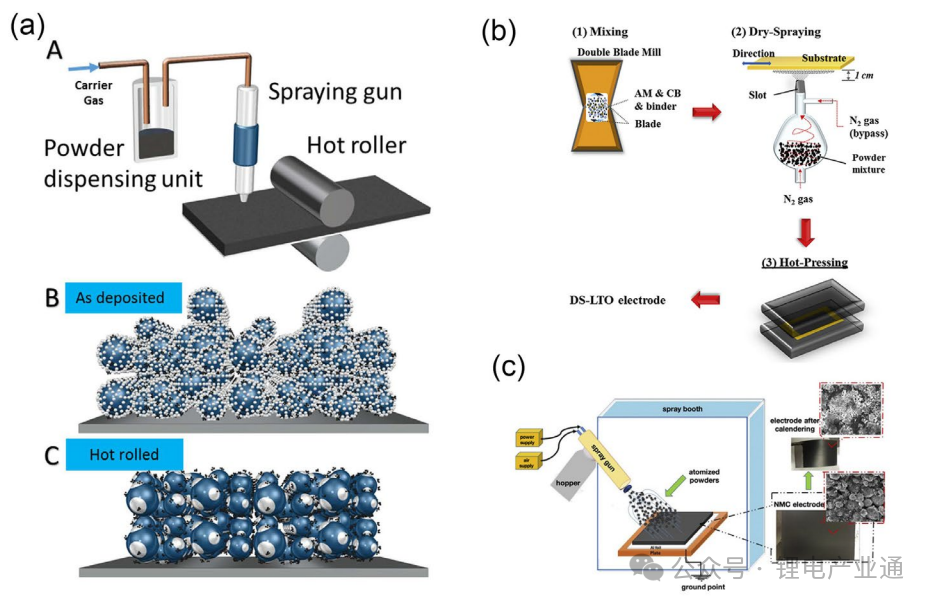
The problems of uneven thickness and poor interface contact in traditional solid-state battery electrolyte layer preparation processes are essentially due to a mismatch between the process principles and the core requirements of electrolyte layer preparation. These pain points can be precisely solved by ultrasonic atomization spraying technology. Compared to traditional processes, the core advantage of ultrasonic atomization spraying stems from its unique working mechanism: high-frequency mechanical vibration generated by a piezoelectric ceramic transducer transforms solid electrolyte slurry into uniform micron or nano-sized droplets, which are then precisely transported using a low-speed carrier gas, ultimately forming a dense and uniform electrolyte coating on the substrate surface. This "low-energy atomization + precise deposition" model fundamentally avoids the technical shortcomings of traditional processes, providing a reliable guarantee for the high-quality preparation of the electrolyte layer.
In-depth analysis reveals that the core technology of ultrasonic atomization spraying lies in its dual characteristics of "precise controllability" and "gentle deposition," which are also key to its suitability for solid-state battery electrolyte layer preparation. Specifically, the stability of the high-frequency vibration system directly determines the uniformity of the atomized droplets. A high-quality piezoelectric ceramic transducer ensures a constant output vibration frequency, keeping the droplet size distribution deviation within a minimal range, laying the foundation for the uniformity of the subsequent coating. Meanwhile, the precise control of the low-speed carrier gas system prevents droplet diffusion or aggregation during transport, ensuring that each droplet of slurry is precisely deposited in the target area. Meanwhile, the atomization and deposition processes of this technology occur in a low-temperature environment, effectively avoiding the damage to the activity of electrolyte materials caused by high temperatures. This makes it particularly suitable for the preparation of thermosensitive solid electrolyte materials such as sulfides and oxides, further expanding its application range.
Firstly, it offers extremely high thickness uniformity and precise controllability. Ultrasonic atomization spraying allows for precise control of coating thickness from sub-micron to micron levels, with thickness deviations kept within an extremely small range. This is due to the stability of its atomization process-high-frequency vibration ensures uniform droplet size distribution, and combined with a modular spray trajectory control system, it enables consistent deposition of large-area coatings, effectively avoiding defects such as edge thickening and localized porosity common in traditional processes. For solid electrolytes with different systems such as oxides and sulfides, this technology can optimize parameters such as vibration frequency and slurry supply rate to adapt to the rheological properties of different materials, ensuring the stability of coating quality.
Secondly, it offers excellent interfacial contact performance. Traditional processes often result in gaps between the electrolyte layer and electrode interface, leading to high interfacial impedance. Ultrasonic atomization spraying, however, employs a low-energy spraying mode, where atomized droplets are deposited gently on the substrate surface, better conforming to the substrate's microstructure and forming a tight interfacial bond. Simultaneously, the uniform and dense coating structure not only reduces ion transport resistance but also effectively suppresses interfacial side reactions during charge and discharge, improving battery cycle stability and safety. Experimental data shows that sulfide electrolyte layers prepared using ultrasonic atomization spraying achieve ionic conductivity at the 1 mS·cm⁻¹ level. Batteries made with sprayed composite cathodes retain 63% of their capacity after 800 cycles, fully validating their interface optimization effect.
Thirdly, it offers high material utilization and industrial applicability. Traditional pressure spraying suffers from significant overspray, resulting in low material utilization. Ultrasonic atomization spraying, with its highly directional atomized droplets, significantly reduces overspray, increasing material utilization to over 90%, thus substantially lowering the manufacturing cost of solid-state batteries. More importantly, this technology possesses excellent scalability. Through a modular design of multi-nozzle arrays, it enables continuous spraying of wide-width substrates, meeting the mass production needs of GWh-level production lines. Simultaneously, its low-temperature spraying characteristics avoid damage to electrode materials during high-temperature processes, and it is compatible with the fabrication of novel battery structures such as flexible substrates, providing process support for structural innovation in solid-state batteries.
The practical application of this technology relies on suitable equipment support. RPS-SONIC addressing the core needs of the solid-state battery industrialization process, has launched a full range of ultrasonic atomization spraying equipment suitable for pilot-scale and mass production stages, providing crucial guarantees for the industrialization of this technology. This series of equipment focuses on the core pain points of solid-state battery manufacturing and has undergone multiple customized optimizations: First, it adopts highly stable piezoelectric ceramic transducers to ensure consistent atomization during long-term continuous operation, adapting to the continuous operation requirements of mass production lines; second, it is equipped with an intelligent process control system that can monitor key parameters such as temperature, humidity, and droplet size in real time during the spraying process, enabling adaptive adjustment of process parameters and reducing quality fluctuations during mass production; third, it has flexible compatibility, providing customized equipment solutions based on customers' electrolyte material systems, substrate sizes, and production capacity requirements, achieving a seamless transition from laboratory pilot testing to mass production lines.

Currently, the industrialization of solid-state batteries is at a critical stage of transitioning from laboratory research and development to large-scale production, and breakthroughs in electrolyte layer preparation technology are one of the core breakthroughs. Ultrasonic atomization spraying technology, with its core advantages of good uniformity, superior interface, low cost, and ease of scalability, has become the preferred technical route to solve the bottlenecks in electrolyte layer preparation. Hangzhou Gonglu's ultrasonic atomization spraying equipment provides reliable equipment support for the industrialization of this technology by precisely matching the process requirements of solid-state battery pilot and mass production. With continuous technological iteration and equipment optimization, ultrasonic atomization spraying will further promote cost reduction and performance improvement in the solid-state battery industry, accelerate its large-scale application in new energy vehicles, portable electronic devices and other fields, and inject core impetus into the high-quality development of the new energy industry.