

Feasibility And Process Scheme For Extracting Pectin From Apple, Quince Pore, And Orange Peel Using Ultrasonic Extraction Equipment
Dec 11, 2025
Ultrasonic extraction equipment can effectively extract pectin from apple pomace, quince pomace, and orange peel. Compared to traditional hot water extraction and acid extraction methods, it offers significant advantages such as high extraction efficiency, short extraction time, low temperature, and higher pectin yield and purity. Its core principle utilizes the cavitation effect, mechanical vibration effect, and thermal effect of ultrasound to disrupt the cellulose and hemicellulose structures of plant cell walls, accelerating the dissolution of pectin from the cell walls while minimizing the damage to pectin molecular structure caused by high temperatures.

I. Core Principle of Pectin Extraction (Ultrasonic Enhancement Mechanism)
Cavitation Effect: When ultrasound propagates in the extraction liquid, it generates numerous tiny bubbles. These bubbles rapidly expand and burst, releasing instantaneous high pressure and impact force, directly tearing the cell walls of the pomace/orange peel, causing the pectin within the cells to quickly dissolve into the extraction liquid.
Mechanical Vibration Effect: The high-frequency vibration of ultrasound generates a strong mechanical stirring effect on the material particles, reducing the concentration difference between the extraction liquid and the material surface, and accelerating the mass transfer process. Thermal Effect: The energy of ultrasound is converted into localized trace heat, which can increase the molecular motion rate of the extract, but the overall temperature is much lower than that of traditional heating extraction, avoiding pectin degradation due to high temperatures and ensuring the molecular weight and gelation properties of the pectin.
II. Specific Process Flow (Applicable to Apple Pomace, Quince Pomace, and Orange Peel)
1. Raw Material Pretreatment Pretreatment is a crucial step determining pectin yield and purity, requiring the removal of impurities and interfering components from the raw materials:
* Washing and Impurity Removal: Rinse the apple pomace, quince pomace, and orange peel with clean water to remove dirt, pesticide residues on the peel surface, and fruit pulp fragments from the pomace.
* Drying and Grinding: Place the washed raw materials in a 40-60℃ oven to dry to constant weight (moisture content <10%), then grind them into 20-40 mesh powder using a grinder. Particle size that is too small will easily lead to turbidity in the extract, while particle size that is too large will hinder ultrasound penetration.
1. Defatting and Desugaring (Optional, to Improve Pectin Purity): If the raw material has a high oil content or soluble sugar content (e.g., orange peel contains essential oils), it can be soaked in 95% ethanol at a material-to-liquid ratio of 1:5 (g/mL) for 2 hours, then refluxed for defatting and desugaring. After filtration, it is dried to remove impurities such as oil and oligosaccharides, preventing them from binding with pectin during subsequent extraction.
2. Ultrasonic-Assisted Pectin Extraction: This step is crucial and requires precise control of extraction parameters, which vary slightly depending on the raw material.
**Extraction Solution Preparation:** Pectin is an acidic polysaccharide and needs to be dissolved under acidic conditions. Commonly used extraction solutions are hydrochloric acid, citric acid, or oxalic acid solutions, with a concentration controlled between 0.05-0.2 mol/L. Oxalic acid solution can chelate calcium and magnesium ions in the raw material, reducing pectin cross-linking and precipitation, resulting in a higher yield and making it more suitable for orange peel and apple pomace.
**Material-to-Liquid Ratio Adjustment:** Mix the raw material powder and extraction solution at a ratio of 1:15-1:30 (g/mL) and place in an ultrasonic extraction vessel. A low material-to-liquid ratio will lead to insufficient mass transfer, while a high ratio will increase the cost of subsequent concentration.
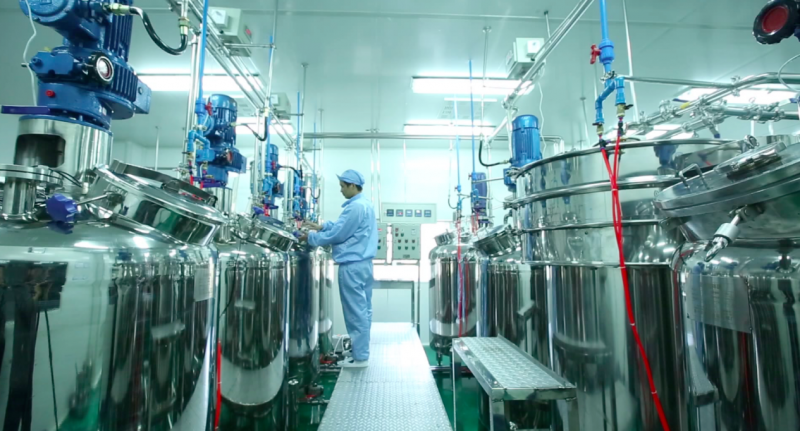
Extraction Operation: After thoroughly mixing the liquid, turn on the ultrasonic extraction equipment and extract according to the set parameters. Intermittent ultrasonication can be performed during the process (5 minutes of ultrasonication followed by a 1-minute pause) to reduce equipment heating and avoid localized overheating. After extraction, filter through a 400-600 mesh screen and collect the filtrate (containing pectin). The residue can be extracted again to improve the yield.
3. Pectin Separation and Purification: The pectin in the extract needs to be separated and precipitated to remove impurities, yielding crude or refined pectin:
Concentration: Concentrate the filtrate to 1/4-1/5 of its original volume using a vacuum concentrator at 50-60℃, reducing the amount of precipitant needed.
Precipitation: Slowly add 95% ethanol to the concentrate until the final ethanol concentration reaches 60%-70% (volume fraction), stirring continuously. Let stand for 4-8 hours. The pectin will precipitate as a white flocculent precipitate due to decreased solubility.
Filtration and Washing: Filter using a Buchner funnel, collect the precipitate, and wash 2-3 times successively with 70% ethanol and 95% ethanol to remove residual acid and soluble sugars.
Drying and Grinding: Place the washed pectin precipitate in a vacuum oven at 45-50℃ to dry, then grind to obtain crude pectin. For high-purity pectin, further dialysis or ion exchange resin methods can be used to remove impurities.
III. Key Process Requirements
Acidity Control: The pH of the extraction solution must be maintained between 1.5 and 3.0. Too low a pH will lead to pectin molecule degradation, while too high a pH will result in insufficient pectin dissolution.
Ultrasonic Parameter Matching: The ultrasonic power and frequency need to be adjusted according to the raw material particle size; larger particle sizes require higher power. The extraction time should not be too long; exceeding the threshold slows down yield growth and increases energy consumption.
Temperature Stability: Temperature needs to be monitored in real time during extraction to avoid temperatures exceeding 60℃ due to ultrasonic thermal effects. Temperature control can be achieved through the equipment's cooling system.
Precipitant Dosage: The final ethanol concentration must be strictly controlled between 60% and 70%. Below 60%, pectin cannot be completely precipitated; above 70%, it will increase impurity precipitation.
IV. Precautions
Raw Material Pretreatment Taboos:
Drying temperature should not exceed 60℃, otherwise it will cause pectin denaturation. After pulverization, the raw material must be sealed and stored to prevent moisture absorption and clumping.
During defatting and desugaring, ethanol must be recycled to reduce costs and avoid environmental pollution.
Equipment Operation Precautions:
The ultrasonic extraction tank needs to be cleaned regularly to prevent residual pectin and impurities from adhering to the surface of the ultrasonic probe, affecting ultrasonic efficiency.
Stirring must be maintained during extraction to prevent raw material particles from settling at the bottom of the tank, resulting in insufficient local ultrasonic intensity.
When the equipment is running, the tank must not be opened to prevent ultrasonic waves from causing harm to the human body (such as hearing damage or skin irritation).
Pectin Storage Precautions:
Dried pectin should be stored in a dry, cool, and ventilated place, avoiding moisture and light exposure to prevent degradation of pectin gel properties.
For long-term storage, it can be sealed and refrigerated (4℃), with a shelf life of over 12 months.
Environmental and Safety Requirements: Extraction waste liquid must be neutralized to neutral before discharge to avoid acidic wastewater contamination of soil and water sources.
Ethanol is flammable; keep away from open flames during precipitation and washing processes, and ensure a well-ventilated operating environment.